Bioconversion of bio-waste to value-added products
Bioethanol, biohydrogen, and PHA from lignocellulose and waste streams
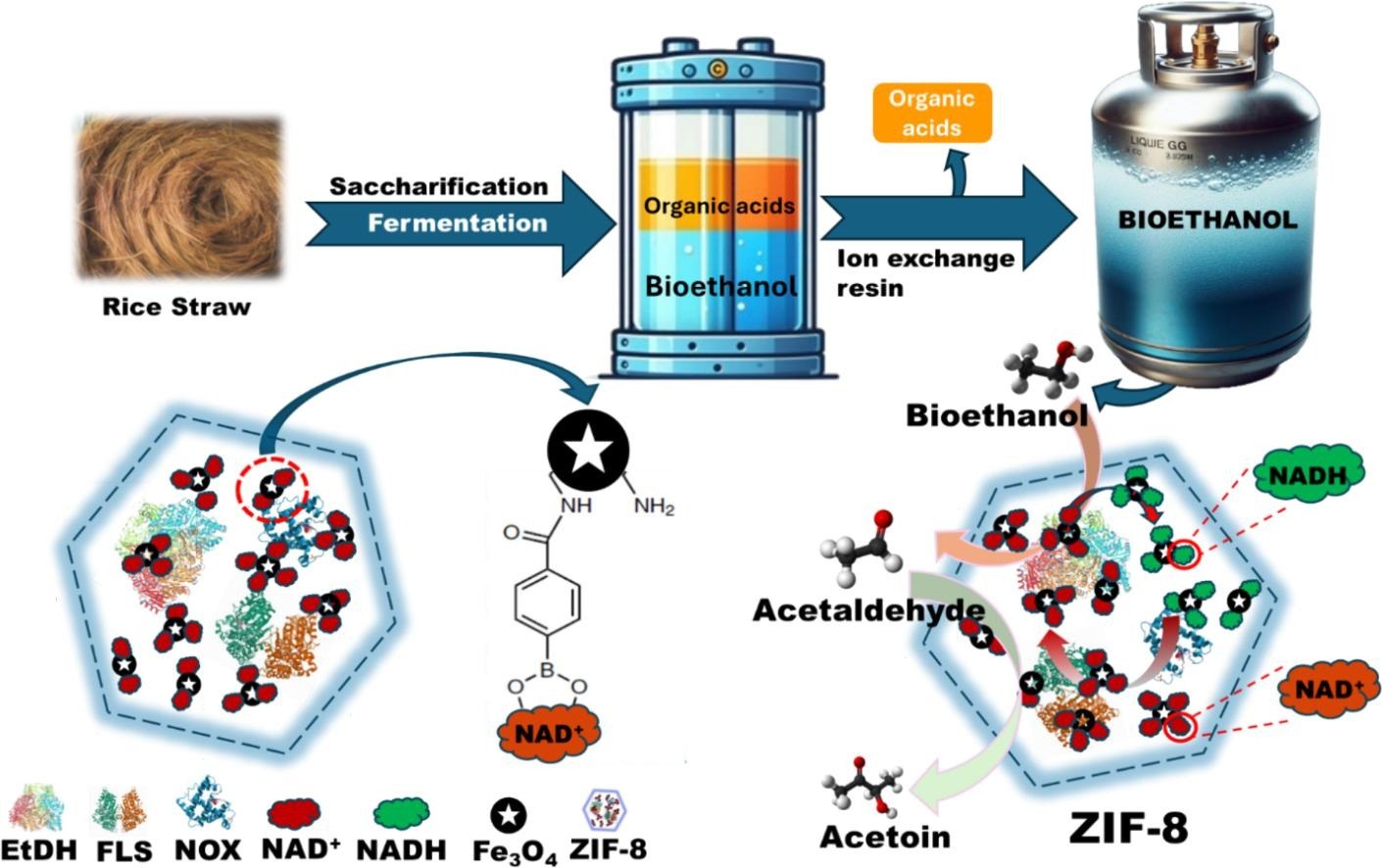
Lignocellulosic biomass and waste streams were converted to bioethanol and biohydrogen. Because enzyme cost is a principal expense in cellulosic ethanol production, enzyme and whole-cell immobilization were applied to reduce it. Related work covers immobilized bacteria for hydrogen production, enzyme cocktails for rice-straw saccharification, and the treatment of biodiesel effluent. Rice-straw bioethanol has also served as the feedstock for the cascade enzymatic production of acetoin in a cofactor-regenerating magnetic metal–organic framework.
Related publications
- Enhanced Saccharification and Fermentation of Rice Straw by Reducing the Concentration of Phenolic Compounds Using an Immobilized Enzyme Cocktail. Biotechnology Journal 2019. doi:10.1002/biot.201800468
- Continuous biohydrogen production from poplar biomass hydrolysate by a defined bacterial mixture immobilized on lignocellulosic materials under non-sterile conditions. Journal of Cleaner Production 2021. doi:10.1016/j.jclepro.2020.125037
- Bioprocessing of Biodiesel Industry Effluent by Immobilized Bacteria to Produce Value-Added Products. Applied Biochemistry and Biotechnology 2018. doi:10.1007/s12010-017-2637-7
- Nonsterile Process for Biohydrogen Production: Recent Updates, Challenges, and Opportunities. Indian Journal of Microbiology 2024. doi:10.1007/s12088-024-01319-1
- Recent Developments in Hydrogen Production, Storage, and Transportation: Challenges, Opportunities, and Perspectives. Fire 2024. doi:10.3390/fire7070233